The Sacred Water Temples of Bali: A Spiritual Journey


Bali's Living Spiritual Heritage
Bali is known as the "Island of the Gods," and nowhere is this more evident than in its magnificent water temples. These sacred sites have been centers of worship, purification, and community for over a thousand years.
Tirta Empul: The Mother Temple of Holy Water
Built in 962 AD, Tirta Empul is one of Bali's most important temples. The name means "holy water spring," and the temple is built around a sacred spring believed to have been created by the god Indra. Balinese Hindus come here for spiritual cleansing rituals, bathing in the holy pools fed by 30 separate spouts.
Each spout has specific spiritual properties, from cleansing negative energy to bringing prosperity and health. Visitors can participate in the melukat (purification ritual), but it's essential to do so with respect and proper guidance.
Pura Ulun Danu Bratan: The Temple on the Lake
Perhaps Bali's most photographed temple, Ulun Danu Bratan appears to float on Lake Bratan in the cool highland mountains. Built in 1633, it's dedicated to Dewi Danu, the goddess of water, and serves an essential role in Bali's agricultural water temple network (subak system).
The temple's reflection in the lake creates a mystical atmosphere, especially in the early morning mist. The complex includes several shrines, each dedicated to different deities, and the multi-tiered meru towers are stunning examples of traditional Balinese architecture.
The Subak System: UNESCO World Heritage
Bali's water temples aren't just beautiful - they're the spiritual heart of a sophisticated irrigation system that dates back to the 9th century. The subak system coordinates rice planting schedules and water distribution across thousands of hectares of rice terraces.
This philosophical approach, known as Tri Hita Karana (three causes of happiness), maintains harmony between humans, nature, and the spiritual realm. UNESCO recognized this unique system as a World Heritage site in 2012.
Temple Etiquette: What Visitors Should Know
- Dress Code: Wear a sarong and sash (usually provided at temple entrance)
- Women: Cannot enter during menstruation (traditional Hindu custom)
- Respect: Stay quiet during ceremonies, don't climb on structures
- Photos: Ask permission before photographing worshippers
- Offerings: Never step on offerings placed on the ground
Experience Water Temples by E-Bike
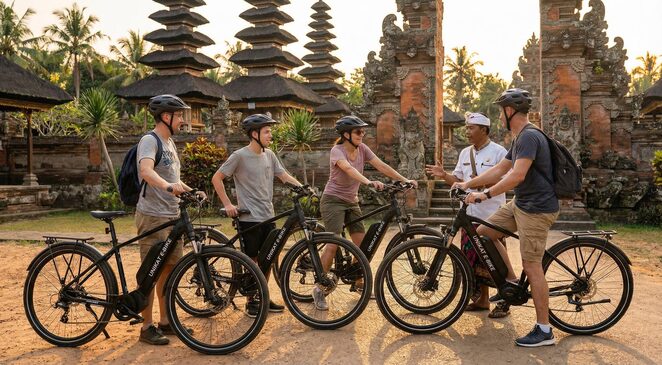
Our Ubud and Central Bali E-Bike Tours include visits to water temples, providing context and cultural understanding that enriches the experience. Riding through rice terraces to reach these sacred sites gives you a deeper appreciation for the connection between spirituality, agriculture, and daily Balinese life.
Best Times to Visit
Early morning (7-9 AM) offers the most serene experience with fewer tourists and often catches morning ceremonies. Full moon and new moon days (Purnama and Tilem) see special ceremonies with many local worshippers - fascinating to observe but more crowded.
Visiting Bali's water temples offers more than just beautiful photos; it's a window into the spiritual practices that have sustained Balinese culture for millennia. Approach with respect and an open mind, and you'll leave with unforgettable memories.